 Ride CT & Ride New England Serving New England, NYC and The Hudson Valley!

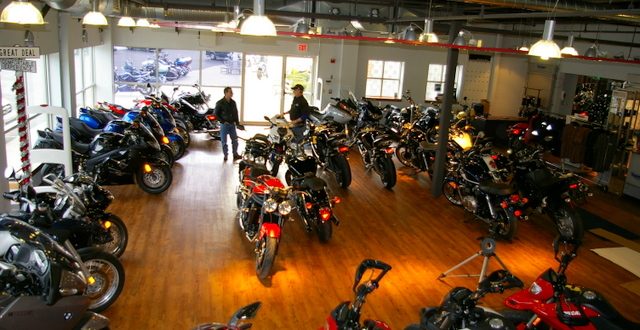
We all have stories about disappointing experiences at motorcycle dealerships. A recent article on advrider.com reviewed some of the more common complaints. Judging by the reader comments, it seems that most folks agree that dealers are seriously failing their customers.
Rather than pile on with my horror stories, I’d like to provide some perspective based on my 50 years of riding experience and from having owned nearly thirty bikes (at least half of which were purchased at dealerships). I’ve also spent multiple decades working for dealerships in management roles, and also as a consultant providing guidance to new and existing stores.
The Tip of the Iceberg
When we enter a motorcycle dealership, we see the result of lots of toil and financial investment. As potential buyers we don’t care what it takes to put a winning dealership together. All we want is to deal with knowledgeable employees who take a genuine interest in fulfilling our wants, needs, and expectations.
Unfortunately, many dealers fail to measure up. The owners are heavily focused on financial success and consequently lose sight of how well they are satisfying their customers.
Nowhere is this more obvious than the showroom…
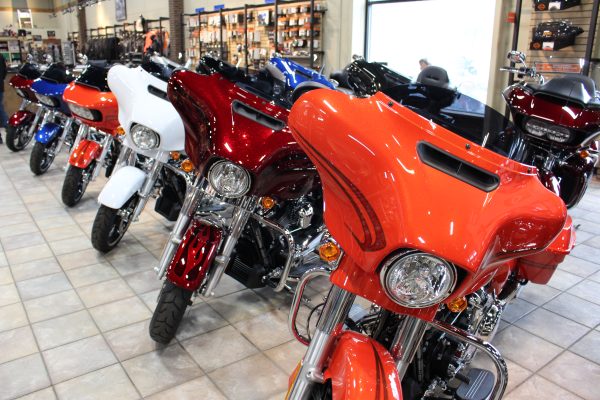
Why Are So Many Salespersons So Awful?
Ever visited a showroom and been ignored by the sales staff? We all have.
Ever talked with a salesperson who is mostly clueless about the very products they’re supposed to sell? Most of us do homework online before shopping for a bike, which makes the uninformed salesperson look even worse, and makes you wonder why you’re wasting your time with them.
This situation is almost entirely a management failure. While it’s easy to blame the hapless soul who’s been dumped onto the sales floor to “move the metal,” the real blame lies with management.
It’s management that hired an inexperienced person; it’s management that failed to recognize whether that person has the requisite skills to be an effective salesperson; and it’s management that didn’t provide sales training that even seasoned salespersons can benefit from on occasion.
Also, did management offer a competitive compensation plan and offer regular feedback and suggestions for improvement? I’ve been in more than a few dealerships where management doesn’t spend any significant time with salespeople – they just want to see results. You might think this sounds bizarre (and you’d be right), but it happens a lot.
Inadequate management can result in a poor experience for showroom visitors. Unfortunately, it happens far too often. To be sure, there are dealerships that are run by enlightened professionals who take the time to make sure their salespeople are doing the best job possible to meet and greet, interview, inform, present bikes properly, and close sales.
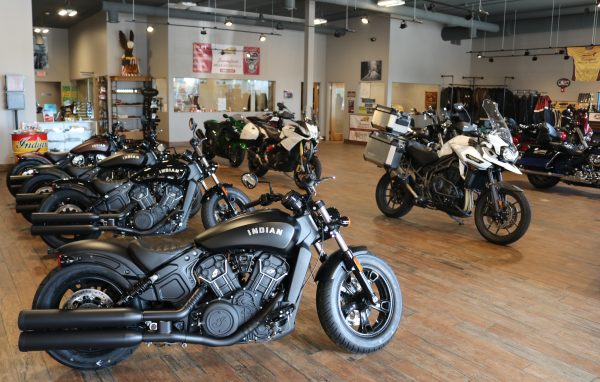
I’ve had this kind of interaction with a few salespersons along the way. One in particular bowled me over when, in a few minutes, he questioned me about what bike I was riding; what sort of rides did I go on (long, short, etc.); where did I like to ride, and whether solo or in a group. He asked why was I in the store today, just snooping or seriously shopping for a bike, and would I be trading in, buying cash or financing?
Setting the stage like this made the rest of the interaction easy and free of pressure. He had all the facts about the models I was interested in at his finger-tips. Needless to say, this atypical approach helped that salesperson make a sale that day. This kind of success-driven approach can be seen in other departments as well.
All I Wanted Was An Oil Filter And Spark Plugs
Another favorite gripe of customers is their experiences with the parts department. It seems that complaints fall largely into three areas, with the top issue being the lack of inventory on relatively common parts.
Most reasonable customers would understand if a parts department did not stock a body panel for a ten-year-old model. If, however, there was no stock on an oil filter or other popular part for a current model the customer would have every right to be annoyed. That customer would probably be one of the many that have turned to online sources.
Why does this happen? One reason might simply be incompetence on the part of the person responsible for ordering parts. Most dealerships employ a Dealership Management System (DMS). It’s a comprehensive software package that provides critical information on all aspects of the business., including parts inventory management which makes being out of stock of common parts inexcusable.
A second source of annoyance at the parts counter is counter people that clearly lack sufficient knowledge of bikes, parts, and the parts system. Again, you can put a big piece of the blame on management. The parts business is complex involving thousands of unique parts and dozens of suppliers. Training to handle all of this is critical. Getting parts employees up to speed takes time and a commitment from management to get them ready to serve customers. My hat’s off to those really competent parts people that I have encountered.
The really good ones know how to do a parts search quickly and understand the subtle differences in parts for similar but different models. My best experiences with the parts department were always with those parts counter people who were expert about the dealerships’ brands and were super-efficient at fulfilling my requests.
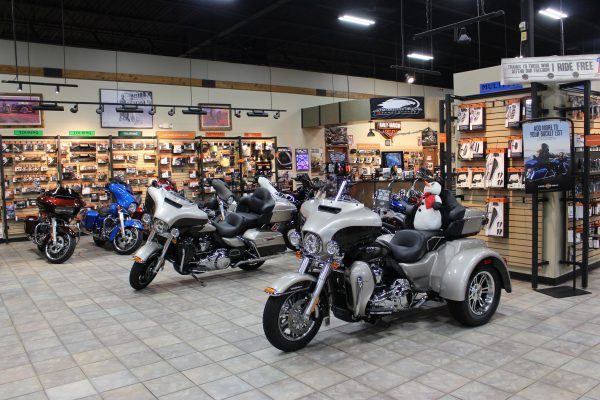
Lastly, we hear complaints about the poor interpersonal skills exhibited by some parts folks. That’s a tough one. Managements’ goal is to have highly competent people manning the parts counter and ordering desk. Acquiring and keeping good parts folks is a major challenge. If the dealership is fortunate enough to have solid parts people, they will probably be willing to sacrifice a good “bedside manner” just to keep those much-needed other skills on board.
I’ve always felt that the parts business is such a data-driven field that it often requires nerd-like skills to be effective. That doesn’t usually include top-notch interpersonal skills as well. If I can get two out of three (good inventory and technically competent parts people), then I’m willing to cut them some slack in the personality department.
An Annoying Visit To The Service Department
Similar conclusions can be drawn when we look at service departments – especially the service writers. They are also critical customer-facing employees. Can you imagine working with a service writer who is not very technically competent? We have to really depend on their expertise to properly understand our issues and communicate that to the technicians. Again, training and basic aptitude are all-important.
Like other departments in the store, service writer compensation often includes an incentive component based on how much service invoicing they write. It’s their job to bring to your attention any additional work that may be needed beyond your initial request.
When presented with this sort of “upsell,” some of us feel suspicious. It takes a certain level of skill and finesse to present this information to customers without aggravating them. More so than in the parts department, service advisors need to have good interpersonal skills along with their technical expertise. Again, a tough combination to find and nurture.
It takes a lot of work to find and develop competent employees for all departments of the dealership. Failure to do so – or failure to initiate corrective action to fix problem situations – can make or break a dealership.
Over the years, I’ve had hundreds of interactions with dealers. Out of them, maybe two-thirds have been less than satisfactory, which tells me there’s more work to be done by dealers.