 Ride CT & Ride New England Serving New England, NYC and The Hudson Valley!

An increase in Connecticut’s Passport to Parks fee in mid-2025 has unsurprisingly resulted in millions of dollars of increased revenue for the state – conceivably as much as $7 million or more in the past year.
The fee is paid each time a person registers a non-commercial vehicle. The state collected more than $18 million for fiscal year 2025 fiscal year when the fee was $15 for a three-year-registration (or $5 a year).
Last July 1, after being passed by General Assembly, the fee was raised to $24 for a three-year registration (or $8 a year).
The result has been ballooning revenue to more than $21.5 million for the first 10 months of the current fiscal year, according to figures provided to RIDE-CT this week by the state Department of Motor Vehicles. That puts fee revenue on track to potentially top $25 million for the fiscal year that ends June 30.
That is less than the additional $10.5 million that the Office of Fiscal Analysis has estimated it would produce during fiscal year 2026. The fee was created in 2017 under Gov. Dannel Malloy’s administration.

The exact figure for the 2025 fiscal year was a haul of $18,158,001.50, according to the DMV. The take through April for the 2026 fiscal year was $21,523,836.50.
The state’s website explains why the fee’s price was boosted. “The increase goes toward operating our state parks and eliminating the day-use parking fee for all those entering in Connecticut-registered vehicles.”
The state views the Passport to Parks fee as an investment by motor vehicle owners to provide equal access to state parks for all residents and to benefit the approximately 17 million people who visit the 142 state parks and forests annually.
The website explains, “The fee allows the State of Connecticut to give more to the public that now has invested in our park system: increased lifeguards, improved park maintenance, shoulder season camping for spring fishing and fall foliage, and longer hours at our museums and nature centers.”

A recurring complaint over the years among motor vehicle owners who regard the Passport to Parks fee as an excessive tax is that it is unfair to residents who have multiple vehicles. They ask why the fee must be paid repeatedly – each time a person registers a non-commercial vehicle.
For collectors and other enthusiasts with two, three or more models, whether of cars, trucks, motorcycles or a mix of them, it can get expensive.
In recent years, bills introduced in the General Assembly to repeal or reduce the fee or provide exemptions have failed to get traction. All the while, revenue from the tax has grown into a mountain of money.
Nowhere does the state’s website address the added burden for collectors with numerous vehicles that need registering or the fact there’s no cap on the tax. Need a registration, pay up, because the tax is “charged on each non-commercial vehicle registration regardless of how many an owner possesses.”
No doubt more bills will be introduced in the next session of the General Assembly to eliminate or amend the Passport to Parks fee. No doubt they will fail as the other bills have in recent years. Meanwhile, the state reaps an increasing bounty from vehicle-owning residents.
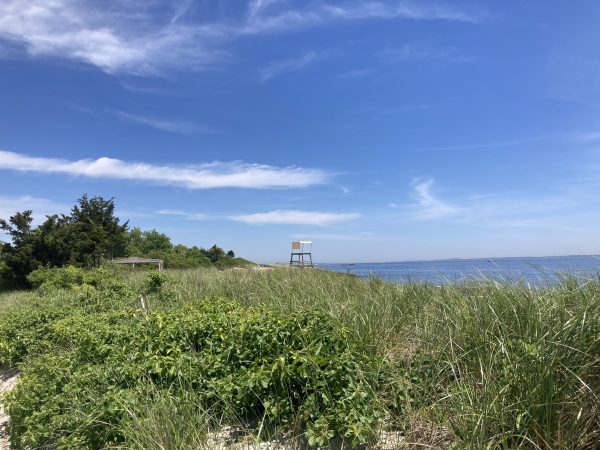

Harkness Memorial State Park in Waterford, left, and Topsmead State Forest in Litchfield
(Photos by Bud Wilkinson.)